
New Braunfels, TX · Garage Door Service
Why a Spring Lets Go on a Cold Night in New Braunfels
In New Braunfels, most garage door springs date to the 1980s-90s building boom. Learn why occasional cold fronts are often what finally breaks them here.
- Repairs & new doors
- Springs & openers
- Serving 7 nearby communities
What to Look At First
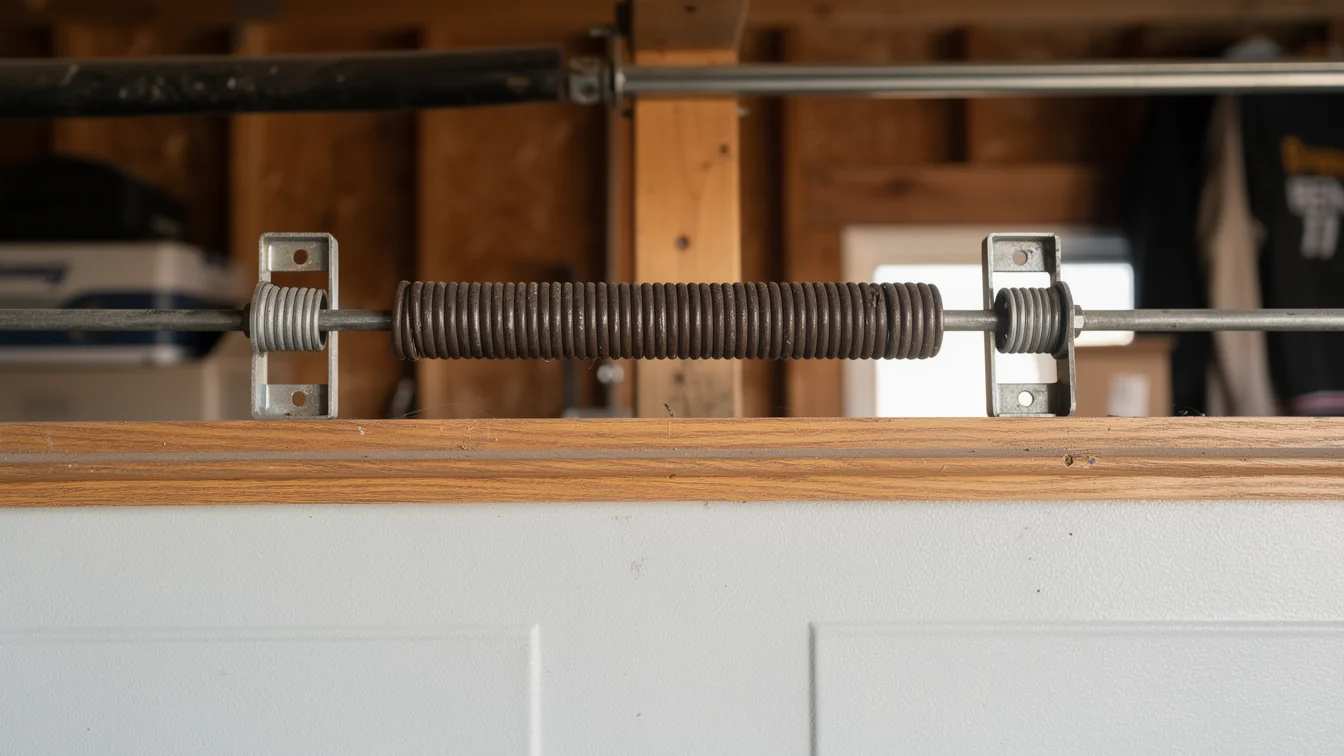
Walk out to the garage and look at the spring itself before you touch anything else. On a torsion door that's the coil above the opening, usually on a steel shaft with two cones; on an older extension setup it's the stretched spring running along the top track on either side. You're looking for a visible gap in the coil, a spring that looks stretched past its rest length, or rust bloom concentrated at one point rather than spread evenly.
Most of the housing stock in this service area went up between 1984 and 2010, with the median build year landing around 1996. That matters here because a huge share of the springs still in these garages are original equipment - factory torsion springs installed when the house was framed, not something swapped out in the last decade. A thirty-year-old spring doesn't announce itself failing; it just gets quieter and slower to lift, then one day it doesn't.
Check the cable too, right where it wraps the bottom bracket. If a spring is about to go, the cable is usually what's under the most stress when it finally does, and a frayed cable at that point is often the louder warning sign. If you see any of this, don't try to wind or unwind the spring yourself - that's the one job here that puts people in the ER.
The Seasonal Bit
New Braunfels sits in a moderate-heat climate band, not a hard-freeze one, so you're not dealing with the kind of sustained sub-zero stretch that snaps springs across the upper Midwest every January. That's the honest limitation worth naming: most of the year, temperature isn't the thing killing your spring.
But a cold front that drops the temperature fast for a night or two still does real work on steel that's already tired. Metal contracts as it cools, and a spring near the end of its cycle life has less give left to absorb that contraction. Add the fact that a lot of these springs are original to houses built in the 1980s-90s push, and you get a pattern that shows up every winter: a handful of cold fronts come through, and the springs that were already close to done finally go, usually on the coldest morning of the stretch rather than a mild one.
It's not that cold weather damages a healthy spring. It's that cold weather is the last small push on a spring that's already near its limit, and in a climate this mild, that push doesn't come often - so when it does, nobody's expecting it.
What Is Going On
A torsion spring is rated for a number of open-close cycles, not a number of years, but years are what you've got to go on since nobody logs how many times a door's opened. What actually happens inside the coil is fatigue: every wind and release flexes the steel a tiny amount, and over thousands of cycles that flex work-hardens the metal until it's brittle instead of springy.
A spring in that state can hold for years under stable conditions and then fail the moment something adds extra load - cold steel being stiffer and less forgiving, a slightly misaligned track adding drag, a heavier door than the spring was ever matched to. None of those causes the failure on their own. They're the straw, not the camel's back.
Given that most garages in this area are running on hardware installed when the house itself went up sometime between 1984 and 2010, a lot of that fatigue clock has already run most of the way out. We don't replace a spring on age alone if it's still cycling smooth and quiet - that's money spent on a part with life left in it. But once a spring shows uneven coil gaps or has already snapped once, the other spring on a double-spring door is usually close behind it, and we'll say so plainly rather than let you pay for one side twice.
How Local Conditions Play In
Across this service area there are 88,090 households and 56,604 owner-occupied houses, and the bulk of them were built during that same 1984-2010 stretch across more than twenty named areas on the local map. That's a lot of garages running on hardware from the same rough era, which is why cold-front season tends to bring a run of similar calls rather than one-off oddities.
Median household income here sits at $85,235, which puts a full two-spring replacement in the category of a planned expense most households can absorb rather than a crisis repair - worth knowing before a cold morning turns one stiff door into a decision made in a hurry.
We work this door, this town, and the towns around it - Santa Clara, McQueeney, Marion, Geronimo, Cibolo, Garden Ridge, Seguin, Schertz, and out toward Canyon Lake and Bulverde. The housing age and the mild-but-not-immune-to-cold-fronts climate play out about the same across that whole stretch, since it's the same building boom and the same weather pattern. If your spring is original to a house from that era, a cold snap isn't bad luck - it's just the moment the fatigue clock finally ran out.
Frequently asked questions
Does cold weather actually break garage door springs in New Braunfels?
Cold weather alone rarely breaks a healthy spring here, since this area sits in a moderate-heat climate band without sustained hard freezes. What happens is a fast cold front stresses a spring that's already fatigued from age - and since most of this housing dates to 1984-2010, a lot of springs are old enough that a cold snap is the final push, not the actual cause.
How old are most garage door springs in this area?
Most houses here were built between 1984 and 2010, with a median build year around 1996, and most garages are still running the torsion springs installed at that time. If your house falls in that range and the spring has never been replaced, it's likely nearing or past its rated cycle life regardless of how it looks.
Is it safe to release a broken spring myself?
No. A torsion spring under tension can cause serious injury if you try to wind, unwind, or remove it without the right bars and clamps. If you see a gap in the coil or a snapped spring, leave the door closed and call rather than attempting it yourself.
Should I replace one spring or both on a double door?
If one spring has already failed and the door is original to a house from the 1980s-2000s building era, the other spring has usually logged the same number of cycles and is close behind. We'll tell you honestly if it's still cycling smooth, but on most jobs at that age we recommend doing both at once.
Related garage door services in New Braunfels
More garage door guides
Book garage door service in New Braunfels
Call now or request a quote - tell us what the door is doing and where you are.