
New Braunfels, TX · Garage Door Service
What Pushes a Door Off Its Track in a New Braunfels Garage
Most New Braunfels homes went up between 1984 and 2010, and the area's heat steadily works on track brackets, rollers, and hinges in predictable ways.
- Repairs & new doors
- Springs & openers
- Serving 7 nearby communities
What to Look At First
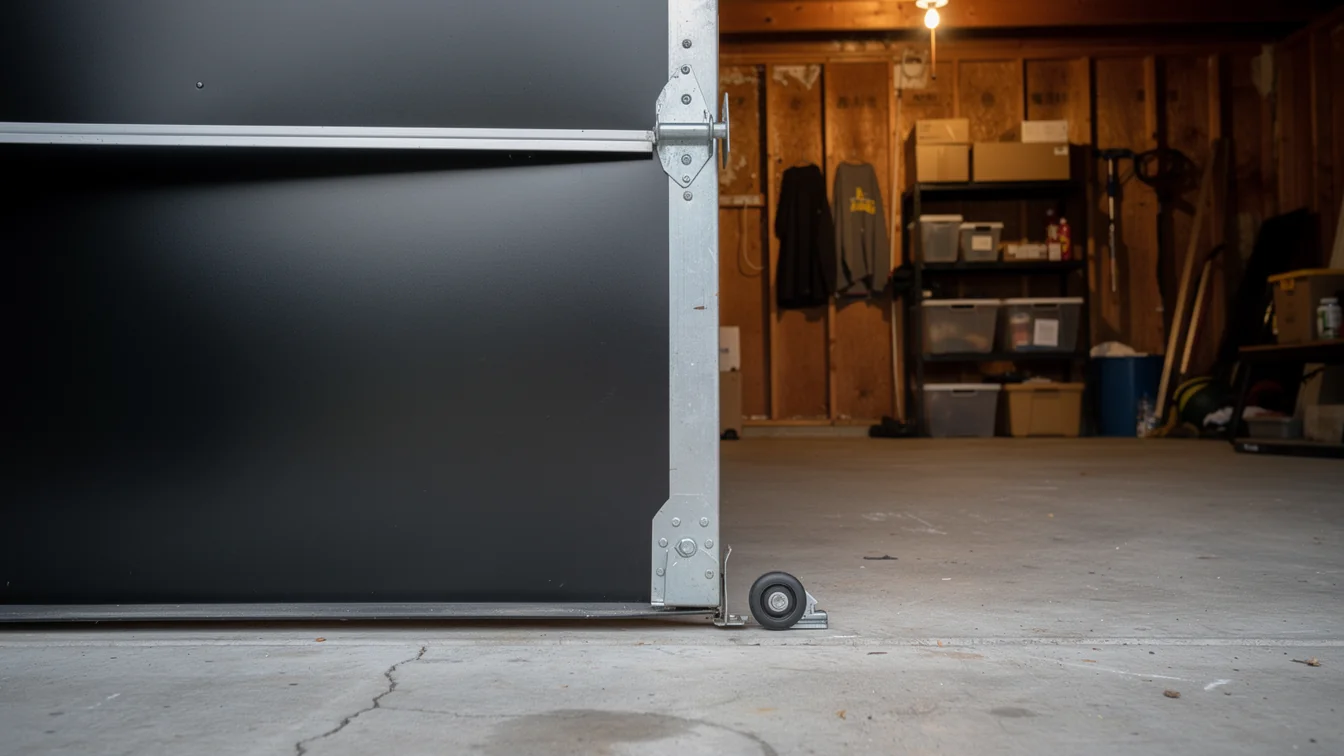
Start at the vertical track where it bolts to the wall framing. Most garage doors in New Braunfels sit on track hardware installed sometime between 1984 and 2010, when the bulk of the area's housing went up, and that's the same stretch where a standardized pressed-steel bracket and galvanized track combo was common across the 20-odd neighborhoods in this service area. Look for a bracket pulled an eighth of an inch or more off the stud, a rail with a visible kink where a bumper or a bike handlebar caught it, or rollers riding on the lip of the track instead of inside the channel.
Check both tracks side by side. A door that's off true usually shows it as a gap on one side that widens as the door travels, not a dramatic jump. If the horizontal track section sags where it meets the vertical, the hanger strap at the ceiling has likely stretched or the lag screw backed out, which is common once hardware from that build era hits the three-decade mark. None of this needs tools to spot. It needs you standing in front of the door with the light on, running the opener slow, and watching where the rollers actually sit.
The Seasonal Bit
New Braunfels falls in a moderate-heat climate band, and that matters more for track alignment than people expect. Steel track expands as it heats through the day and pulls back in at night, and over enough cycles that steady flex works screws loose at the bracket and lets the rail drift a few degrees out of plumb. It's not a dramatic failure, it's a slow one, and it tends to show up as a door that used to run quiet and now has a new scrape or hesitation partway up.
The swing between a hot afternoon and a cooler evening also changes how the door panel itself sits in the track, since steel and aluminum panels grow and shrink at slightly different rates than the track they're riding in. On an older door, that's usually harmless. On a door where the track was already a little loose, the seasonal flex is often what finally pushes a roller out of the channel instead of just along it. This is less about any single hot day and more about years of the same daily cycle repeating on hardware that's already aging out.
What Is Going On
Mechanically, a door comes off track one of three ways: the track itself moves, the rollers wear down enough to ride loose inside the channel, or something hits the door and knocks the rail out of alignment in one spot. Given that most housing in this area dates to 1984-2010, with a lot of it clustered in the 1980s and 90s build pattern, a large share of what we're looking at is original hardware well past its expected service life rather than a fresh installation error.
Worn rollers are the quiet failure. Nylon rollers from that era typically weren't sealed bearings, so decades of use wear the roller itself down to a smaller diameter than the track channel was cut for, and the door starts to wobble before it ever fully derails. A bent track from impact is the loud failure and usually happens in one visit, not over years. Either way, once a roller leaves the channel, running the opener again just bends things further. That's the one place where stopping and calling is cheaper than troubleshooting yourself.
How Local Conditions Play In
With roughly 56,604 owner-occupied houses across the area and most of that stock built in the 1980s and 90s, a lot of original track brackets, rollers, and hinges are now thirty-plus years old at the same time. That's not a coincidence of bad luck, it's a function of when the area grew. Houses built in that window share a lot of the same track gauge and bracket spacing, since they came out of a fairly consistent building-code and construction period, which is part of why the failure patterns look so similar from one house to the next.
The median household income here, at $85,235, is enough that most owners can choose a full track and hardware replacement instead of patching a bent section when the door's old enough that a patch won't hold anyway. We won't tell you to replace something that's still working. If the track is straight, the brackets are tight, and it's just a worn roller or two, that's a small fix. But once a thirty-year-old track has been knocked out of alignment more than once, replacing the whole rail is usually the honest answer, not another repair.
Frequently asked questions
Why did my garage door suddenly come off the track with no obvious impact?
Usually it wasn't sudden. A roller worn down over years, or a bracket that's been slowly pulling away from the wall, finally lets go on an otherwise normal cycle. Given how much of the housing stock here dates to the 1984-2010 window, worn original hardware is the more common cause than a one-time hit.
Can I push the door back onto the track myself?
You can sometimes reseat a roller that's just sitting on the lip of the track, with the door down and the opener disconnected. If the track itself is bent or a bracket has pulled off the wall, forcing the door back on usually makes the bend worse and can drop the door. That's the point to call.
Does the heat here actually affect the track?
Not in one dramatic way, but New Braunfels sits in a moderate-heat climate band, and daily expansion and contraction of the steel track over years gradually works screws loose at the brackets. It's a slow contributor, not the sole cause, but it's part of why older hardware drifts out of alignment.
Is it worth replacing just the track, or the whole door?
If the panels are sound and the track is the only thing off, replacing the track and hardware alone is usually enough. We'd only recommend the whole door if the panels are also failing, which is more common once a door is well past the age of most of the hardware installed during the area's main building years.
Related garage door services in New Braunfels
More garage door guides
Book garage door service in New Braunfels
Call now or request a quote - tell us what the door is doing and where you are.