
New Braunfels, TX · Garage Door Service
What We Actually Check When We Show Up
A plain look at what New Braunfels Garage Door Pros actually checks on a service call, tied to this area's 1984-2010 housing stock and heat-moderate climate.
- Repairs & new doors
- Springs & openers
- Serving 7 nearby communities
What to Look At First
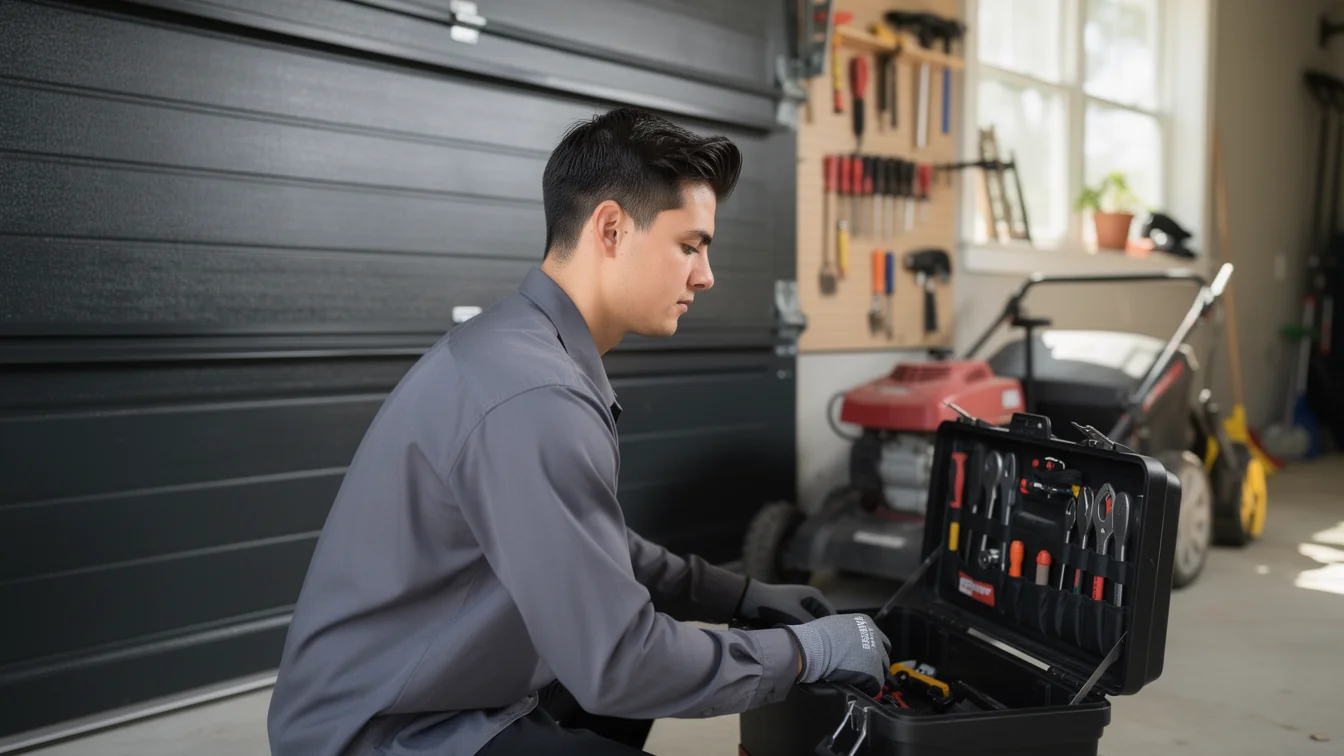
Most of the houses we work on in this part of Texas went up between 1984 and 2010, with the median build year landing around 1996. That one number shapes most of the call before we even open the door. A house from that window usually has a torsion spring system on steel or aluminum sectional panels, not the older extension-spring setups you'd find on much older stock elsewhere. So the first look is the spring itself - coil wear, rust at the winding cone, whether the cable drums are original. Next is the track: is it still the factory-aligned galvanized rail, or has it been bent from a backed-into bump over the last twenty-plus years. We check rollers for flat spots, the bottom bracket for play, and the opener's force settings against what the door weighs now versus when it was new. None of this is guesswork - a door built in 1996 and a door built in 2008 behave differently even if they look the same from the driveway, because the hardware generations differ. We tell you what we see before we touch anything, and if a part looks fine, we say so instead of selling it.
The Seasonal Bit
This area sits in a heat-moderate climate band, which changes what actually breaks compared to a colder-winter town. We don't get the hard freeze-thaw cycle that snaps extension springs or locks up steel tracks with ice. What we do get is sustained heat working on lubricant and plastic. Nylon rollers get brittle faster here. Opener lubricant - the white lithium grease on the screw drive or the factory oil on a belt unit - breaks down and gets tacky under repeated heat, which is why openers start grinding before they fail outright. Track bolts loosen as the metal expands and contracts through the day rather than through a single seasonal swing. On a service call we're checking for heat fatigue, not ice damage: hairline cracks in older plastic idler pulleys, sun-dried weatherstripping at the bottom seal, and whether the steel track has walked slightly out of plumb from years of thermal movement. It's a slower kind of wear than a cold-climate town sees, which is part of why some of these doors run another decade past when an owner expects trouble.
What Is Going On
Call us about a door that won't open and we're ruling things out in order, not guessing. A door that stutters partway up usually points to a spring losing tension - expected on original hardware once it's in the twenty-to-thirty-year range, which covers a lot of the 1984-2010 stock here. A door that reverses right after the floor is almost always the photo-eye sensors or the down-limit setting on the opener, not the springs at all. A loud bang followed by a dead door is a broken cable or a snapped torsion spring, and that one isn't a DIY fix - the spring is under enough load to do real damage if you don't know how to release it. One honest limit here: if the opener is an older unit that's no longer made, we may not have the exact replacement board on the truck, and parts for some of the mid-90s models take longer to source than for current units. We'll tell you that up front rather than stringing out a visit.
How Local Conditions Play In
We run calls out from New Braunfels to Santa Clara, McQueeney, Marion, Geronimo, Cibolo, Garden Ridge, Seguin, Schertz, Zuehl, Selma, Redwood, New Berlin, Canyon Lake, Universal City, Live Oak, Converse, Kingsbury, Martindale, Wimberley, Bulverde, and Vintage Oaks - twenty-some communities inside about a twenty-mile stretch, with a fairly consistent mix of 1980s-to-90s construction across most of them. Across the roughly 56,604 owner-occupied houses in this service area, median household income sits around $85,235, which tends to mean owners replace an opener or spring system rather than let a door sit broken - we see more full-system tune-ups than patch jobs. Because so much of the housing shares that same build era, the failures cluster: when one torsion spring on a given street starts going, the identical spring two doors down is often close behind, installed the same year by the same builder. That's useful on a service call, because knowing the neighborhood's build decade tells us what hardware generation to expect before we even lift the garage door.
Frequently asked questions
Why does my opener grind even though the door still opens fine?
In this climate the lubricant on the drive screw or belt breaks down under sustained heat rather than cold, so it gets tacky instead of smooth. That tackiness shows up as grinding or a slower travel speed well before the opener actually fails. It's usually a re-lube and a force adjustment, not a new motor, unless the gear inside has already worn from running dry.
My house was built in the late 90s - is the spring original?
Possibly. A lot of the stock in this area dates to 1984-2010 with a median build year around 1996, and builders typically installed one torsion spring set that was never touched again. If yours hasn't been replaced, it's likely a few decades old at this point, which puts it well into the range where coil fatigue is common.
Do you carry parts for older opener models on the truck?
For most units built in the common 1980s-2000s range here, yes. For a handful of discontinued mid-90s models, the exact circuit board sometimes has to be sourced, which can add a day or two to the repair. We'll tell you on site whether your unit falls into that category before we start the job.
Related garage door services in New Braunfels
More garage door guides
Book garage door service in New Braunfels
Call now or request a quote - tell us what the door is doing and where you are.